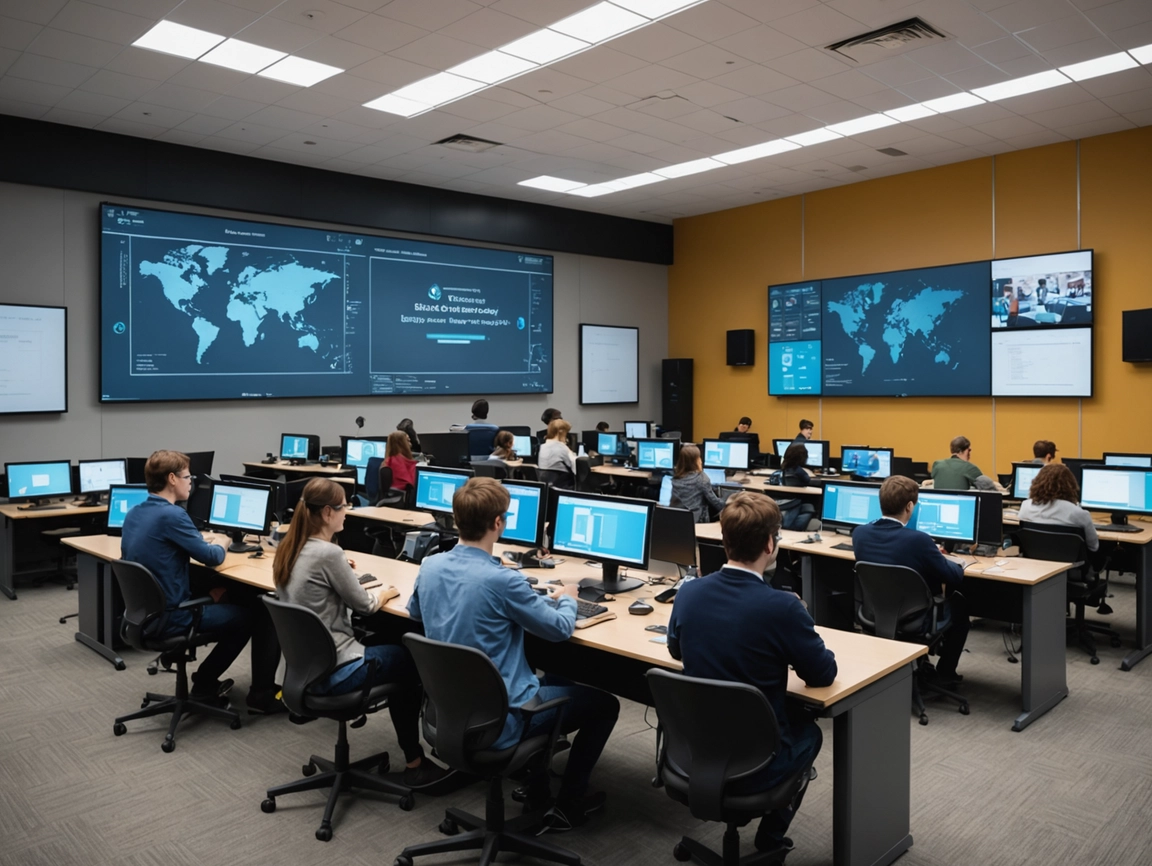

Did you know that 92% of employers believe competency-based education (CBE) graduates are better prepared for the workforce than their traditionally-educated peers? As the modern workforce continues to evolve, competency-based education is gaining traction for its ability to effectively prepare students for the challenges and opportunities in various professional fields. One crucial factor for the success of competency-based education is the integration of real-world experiences, enabling learners to connect theoretical concepts to practical application.
Competency-based education provides a dynamic approach to learning that prioritizes mastery of skills and knowledge over traditional time-based assessments. By incorporating real-world experiences into their curricula, educational institutions can equip students with the practical skills and knowledge essential for thriving in today’s workforce, fostering a commitment to lifelong learning.
Key Takeaways
- Competency-based education is a dynamic approach to learning that prioritizes mastery of skills and knowledge.
- Integrating real-world experiences is a crucial factor for the success of competency-based education programs.
- Real-world experiences enable learners to connect theoretical concepts to practical application.
- Employers believe competency-based education graduates are better prepared for the workforce.
- Competency-based education fosters a commitment to lifelong learning.
Integrating Real-World Experiences into Competency-Based Education
At The Continents States University, integrating real-world experiences into their competency-based education (CBE) programs is a top priority. By providing students with a diverse range of learning opportunities, the university empowers them to apply their skills, knowledge, and critical thinking abilities in authentic contexts, preparing them for the challenges and opportunities of the modern workforce.
Projects and Case Studies
The university’s CBE curricula incorporate project-based learning, where students collaborate on real-world projects and case studies that simulate the challenges they will face in their chosen fields. These hands-on experiences allow learners to develop a deeper understanding of the subject matter, hone their problem-solving skills, and gain practical expertise that will be invaluable in their future careers.
Simulations and Virtual Labs
To further bridge the gap between theory and practice, The Continents States University leverages advanced simulations and virtual labs. These interactive learning environments enable students to experiment, test hypotheses, and refine their skills in a safe and controlled setting, mirroring the realities of their prospective professions.
Internships and Field Experiences
Recognizing the importance of real-world exposure, the university’s CBE programs incorporate internships and field experiences. These immersive opportunities allow students to work alongside industry professionals, apply their knowledge in a professional setting, and gain valuable insights into the day-to-day operations of their chosen career paths.
Collaborative Learning
Fostering a culture of collaboration is another key aspect of The Continents States University’s approach to competency-based education. Through group projects, peer-to-peer learning, and cross-disciplinary teamwork, students develop the essential soft skills, communication abilities, and teamwork strategies that are highly sought after by employers in the modern job market.

Competency-based education case studies: Innovative Approaches in Schools and Districts
The Continents States University’s examination of the competency-based education landscape has revealed several pioneering schools and districts that are leading the way in innovative approaches to CBE. These case studies showcase the transformative power of this educational model and provide valuable insights for other institutions seeking to implement competency-based practices.
MC2: A Progressive Model for Personalized Learning
MC2, a leading charter school network, has embraced competency-based education as a means to foster personalized learning and student-centered instruction. By empowering students to take an active role in their educational journey, MC2 has witnessed remarkable improvements in student engagement, academic achievement, and career readiness. Through the integration of project-based learning, simulations, and industry partnerships, learners at MC2 develop a deep understanding of real-world challenges and acquire the necessary skills to thrive in the modern workforce.
Lindsay Unified School District: A Trailblazer in Competency-Based Learning
Lindsay Unified School District, located in California, has gained national recognition for its pioneering approach to competency-based education. By shifting the focus from traditional time-based assessments to student mastery of skills and knowledge, Lindsay Unified has created a dynamic and inclusive learning environment that caters to the unique needs of each individual student. Through the implementation of personalized learning pathways, collaborative learning opportunities, and flexible pacing, the district has witnessed a significant improvement in student outcomes, including increased graduation rates and college and career readiness.
Purdue Polytechnic High School: Design Thinking and Real-World Challenges
Purdue Polytechnic High School, a STEM-focused institution, has embraced the principles of competency-based education to prepare students for the demands of the 21st-century workforce. By integrating design thinking methodologies and immersing learners in real-world challenges, the school fosters critical thinking, problem-solving, and innovation. Students engage in collaborative projects, simulations, and internships, enabling them to apply their knowledge and skills in authentic contexts and develop a deep understanding of the design process and the importance of innovation.

Conclusion
By integrating real-world experiences into competency-based education programs, The Continents States University not only provides learners with a solid academic foundation but also equips them with the practical skills and knowledge essential for thriving in today’s workforce. Through innovative online learning experiences, such as project-based learning, simulations, industry partnerships, and peer collaboration, The Continents States University prepares its students for a seamless transition into the professional world and fosters a commitment to lifelong learning.
The competency-based education approach adopted by The Continents States University is a testament to the transformative power of this educational model. By prioritizing the mastery of skills and knowledge over traditional time-based assessments, the university ensures that its graduates are well-prepared to tackle the evolving challenges and opportunities in their respective fields.
As you embark on your educational journey with The Continents States University, you can be confident that your real-world experiences and the practical application of your knowledge will not only lead to your academic success but also position you as a highly sought-after candidate in the competitive job market. The university’s unwavering commitment to student success and workforce preparation is a testament to its dedication to empowering the next generation of leaders and innovators.